B—OPSOFFSEC / EU
Most organisations have moved critical workloads to the cloud, but there's a problem: cloud environments are fast, flexible, and powerful. Attackers like those same qualities. Misconfigurations get exploited within minutes. Identity boundaries get tested constantly. One overly-permissive role assignment can lead to an organisation-wide breach. The real question isn't whether you can move to the cloud. It's whether your cloud environment can survive a real attack.
Azure Landing Zones solve this problem (Azure Landing Zones). They're a governance and security architecture that makes cloud environments resilient against red teams, opportunistic attackers, and targeted campaigns. Think of it like an airport: pilots control their aircraft, but a control tower coordinates the airspace. The pilot has autonomy. The tower ensures safety and order. Cloud needs the same balance. Teams need room to build. Security teams need visibility and guardrails to prevent exploitable mistakes.
The landing zone is the entire airport infrastructure: identity systems, network layout, policies, monitoring, shared services, operational boundaries. These components determine what attackers can exploit. You can't bolt runway lighting onto a plane that's already airborne. You can't bolt governance onto dozens of existing subscriptions. Red teams treat environments without landing zones as playgrounds. Mature organisations don't accept that risk.
Why landing zones reduce risk
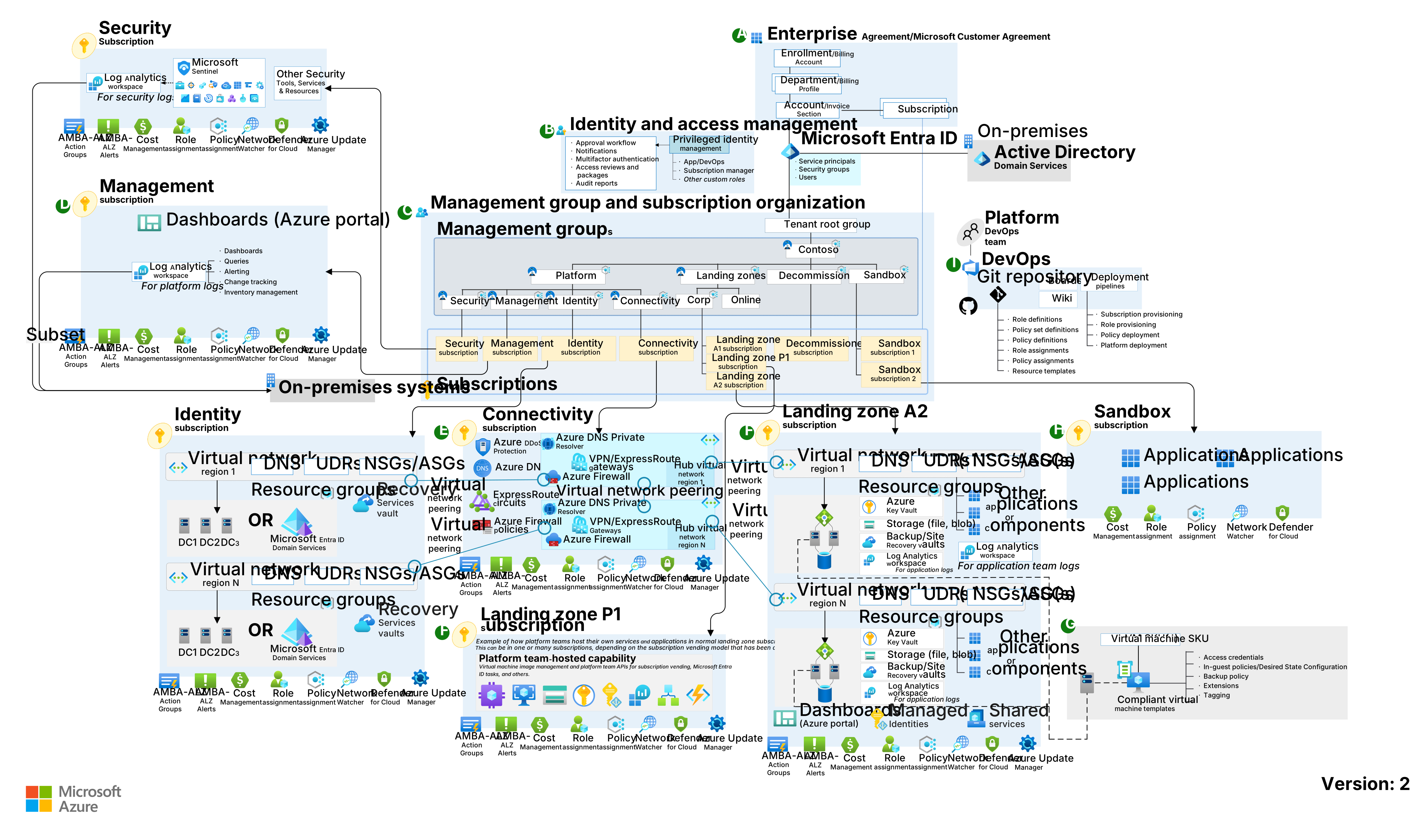
Landing zones reduce attack surface directly. Strong identity and access controls stop lateral movement through default permissions. Management group hierarchies prevent shadow environments from appearing. Defined network topology with egress controls removes easy exfiltration paths and forces attackers through monitored routes. Security baselines at scale prevent "special exceptions" that weaken the environment. Centralised logging and monitoring catch abnormal activity before it goes unnoticed.
Without these foundations, red teams don't need creativity. They just follow the cracks: orphaned subscriptions, unmanaged service principals, inconsistent naming, flat networks, missing diagnostics and teams deploying workloads with unreviewed defaults. These aren't exotic attack vectors. They're the day-to-day findings from every serious cloud assessment. These are the exact weaknesses Azure Landing Zones eliminate before they appear.
What changes during an attack
Here's how this typically plays out: A red team finds an orphaned subscription that nobody monitors. The subscription has a Contributor role assigned to a service principal from a decommissioned project. They use that service principal to create a new managed identity with Owner permissions. They spin up a storage account in that subscription and start copying sensitive data. Because there's no network topology enforcement, they configure public access. Because there's no centralised logging, the exfiltration happens in silence. Within hours, they've moved from an abandoned subscription to exfiltrating production data.
With landing zones in place, management group policies flag the orphaned subscription immediately. Identity governance prevents service principals from creating new managed identities with elevated permissions. Network policies block public storage account access or force all traffic through monitored egress points. Centralised logging captures every action, and security baselines prevent the misconfiguration that allowed the attack. The red team hits guardrails at every step instead of finding open pathways.
Autonomy without open attack paths
Landing zones work because they don't restrict engineering teams. Developers still control their workloads and deployments. They iterate at their own pace. Guardrails prevent them from introducing exploitable conditions accidentally. Identity rules, network boundaries, operational baselines, and mandatory diagnostics are enforced by the "tower". Not to slow teams down, but to stop any single workload from compromising the entire environment. Done right, this cuts red-team opportunities in day-to-day operations.
This approach matches what Rhesa Baar covered in her talk Cloud Security anno 2025: Start Secure, Stay Secure. The idea is straightforward: don't expose weaknesses in the first place. Prevention through architecture beats detection after the fact.
Landing zones started in cloud strategy, but the approach works elsewhere. The same architectural discipline applies to hybrid infrastructures, internal platforms, and identity transformations. The pattern stays consistent: don't let teams deploy into undefined space. Build the runway first. Establish guardrails. Control identity paths. Enforce network boundaries. Centralise observability. Whether workloads are cloud-native, hybrid, or on-prem, the landing zone mindset eliminates ambiguity and inconsistency. These are exactly the conditions that red team exercises and penetration tests exploit. When we assess cloud environments, we consistently find the same gaps: orphaned resources that nobody monitors, service principals with excessive permissions, flat network architectures that make lateral movement trivial, missing logging that hides attacker activity. Landing zones eliminate these weaknesses before they appear. That doesn't mean your environment becomes untestable, it means red teams need to work harder, find more creative paths, and test your actual defensive capabilities rather than relying on basic misconfigurations that should never have existed in the first place.
The same pattern beyond Azure
The goal isn't just to create a cloud environment that runs. It's to create one that attackers can't easily exploit. Autonomy for application teams plus disciplined oversight means fewer misconfigurations to weaponise and fewer blind spots to hide in. Well-designed landing zones turn cloud adoption from an open attack surface into something controlled, observable, and resilient.
The goal
If you want cloud that can stand up to a red team or a real attacker, start with the runway, the tower, and the structure that keeps everything aligned. Azure Landing Zones provide exactly that: a scalable strategy for secure operations that makes your organisation harder to attack, harder to move through, and easier to defend.